Context
The French Golf Federation is the fourth largest national sports federation by membership, with over 446,000 registered players. Its mission is to develop golf in France. The sector counts more than 715 golf facilities (clubs), generates an economic impact of over €1.5 billion, and supports nearly 15,000 direct and indirect jobs. At that scale, the digital interfaces and journeys used by clubs and the federation matter for a very large number of people (players, clubs, and the wider industry) and underpin reliable everyday operations.
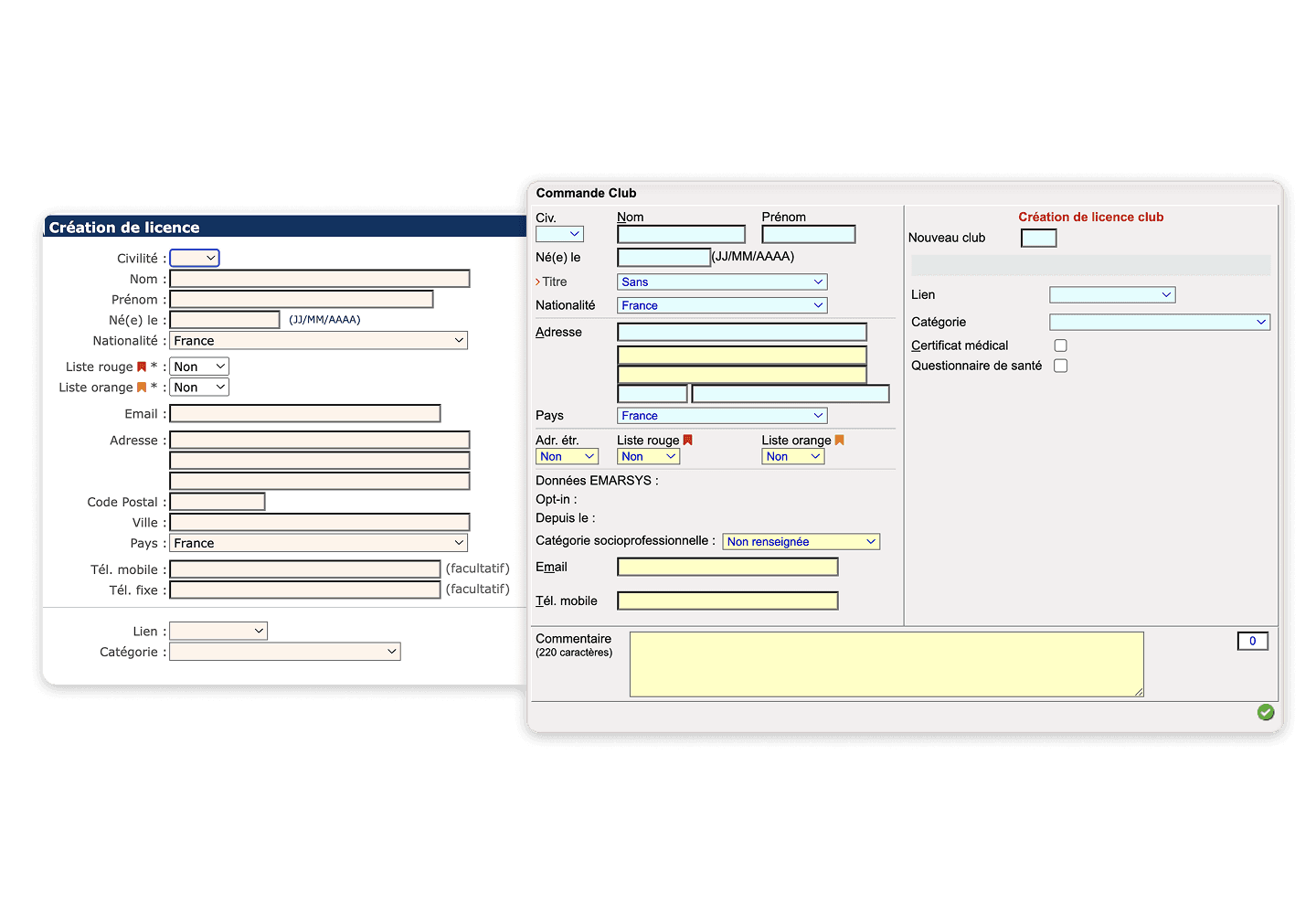
I contributed to the redesign of both the internal tool (for the federation) and the external tool (for clubs), as a merger of two legacy systems. The previous tools had been in use for more than 15 years, with a long history of change and substantial functional and technical debt.
In that context, I focused on a critical journey: licence creation, used daily by clubs to register or renew players.
This process matters because it feeds the national database: every error (duplicate, wrong assignment) directly affects member tracking, billing, and federation operations.
Users work under tight constraints:
- high volume during the season;
- need for speed;
- low tolerance for mistakes.
The challenge was to design an experience that keeps data reliable while staying fast and efficient.
Problems
After analysing the existing journey and field feedback, several major issues emerged.
- Duplicate detection too late: it happened too far in the flow, increasing error risk.
- Create vs renew unclear: the distinction was confusing and created uncertainty.
- Long, repetitive input: many fields were unnecessary or poorly understood.
- Fragmented journey: users jumped between tools and logics without continuity.
- Business rules hard to read: difficult for everyday users.
- Flow performance: too slow for heavy use during peak periods.

UX goals and approach
The goal was to secure licence creation while reducing cognitive load and input time.
I structured the work around three principles:
- Anticipate errors rather than fix them at the end.
- Guide decisions rather than only display data.
- Simplify the experience using familiar patterns.
The aim was not a long form but a decision support system for sensitive choices without slowing clubs down.
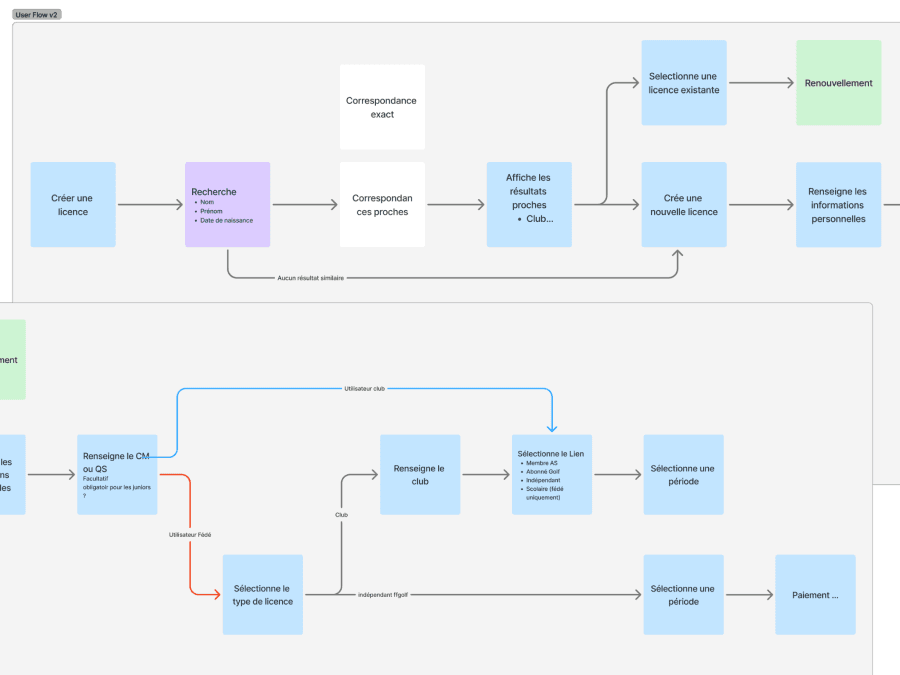
Solution
Structure the journey
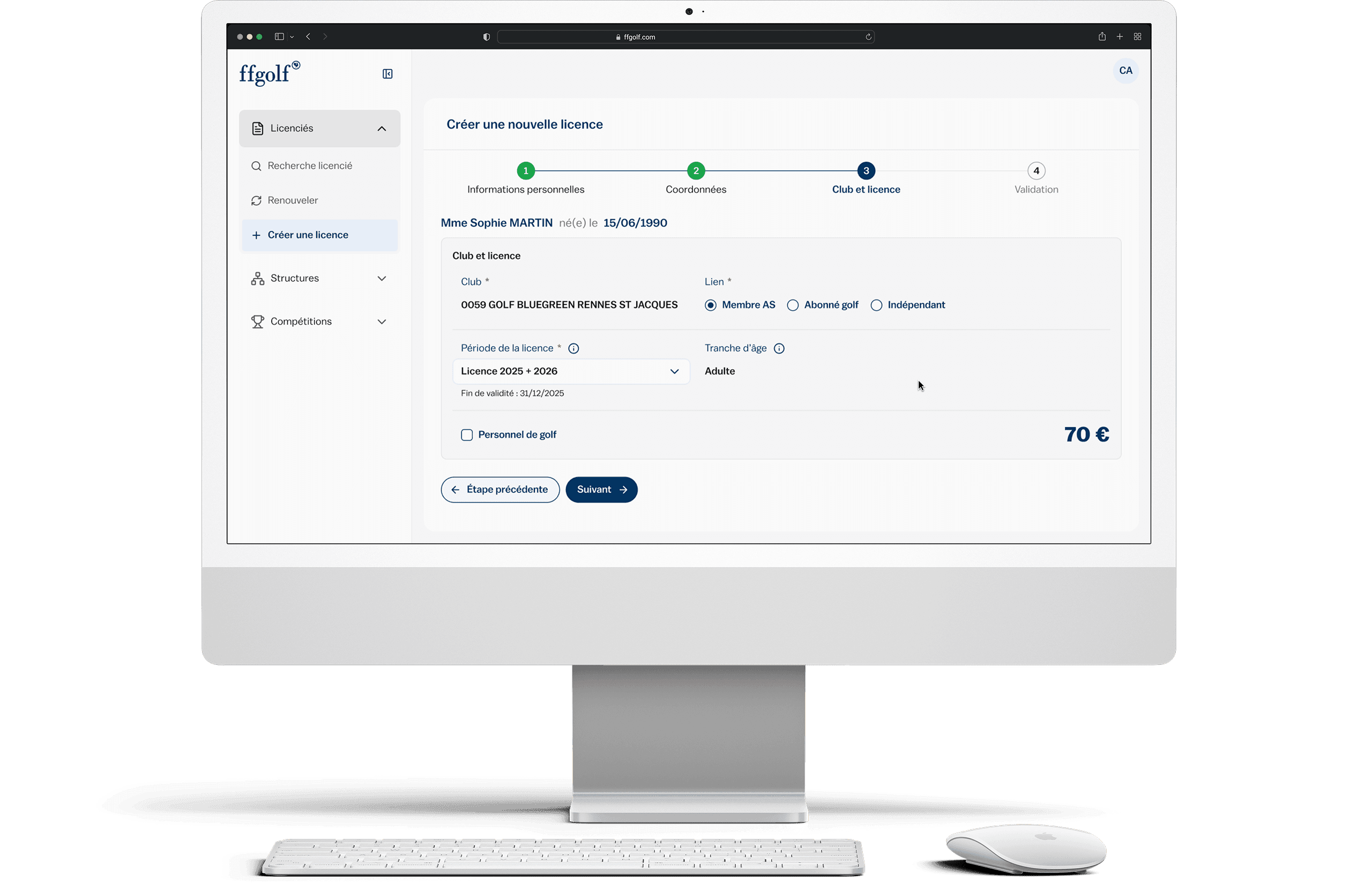
The form is broken into clear steps with visible progress. That spreads cognitive load and avoids an “endless form” feeling.
Detect duplicates at entry
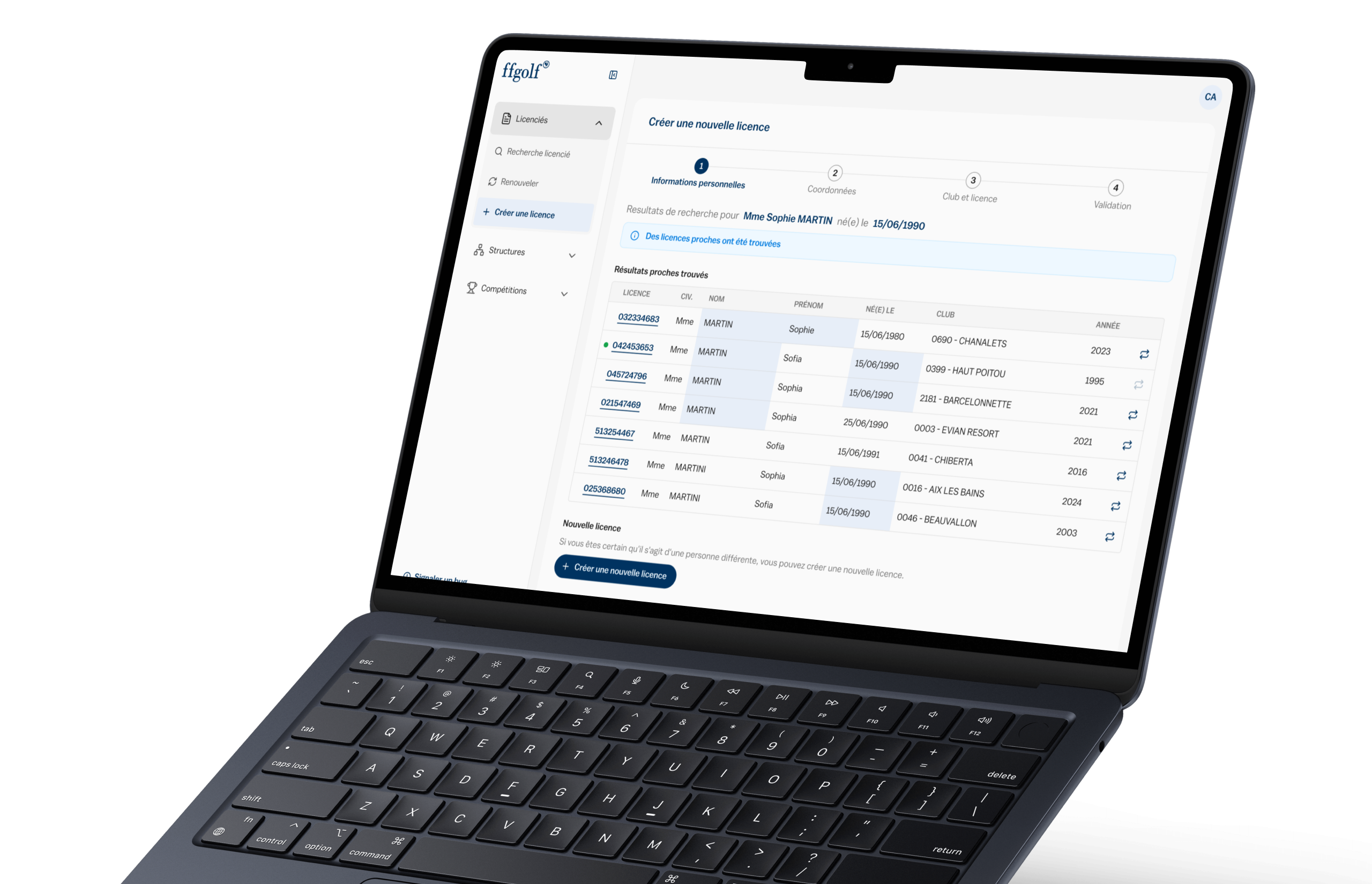
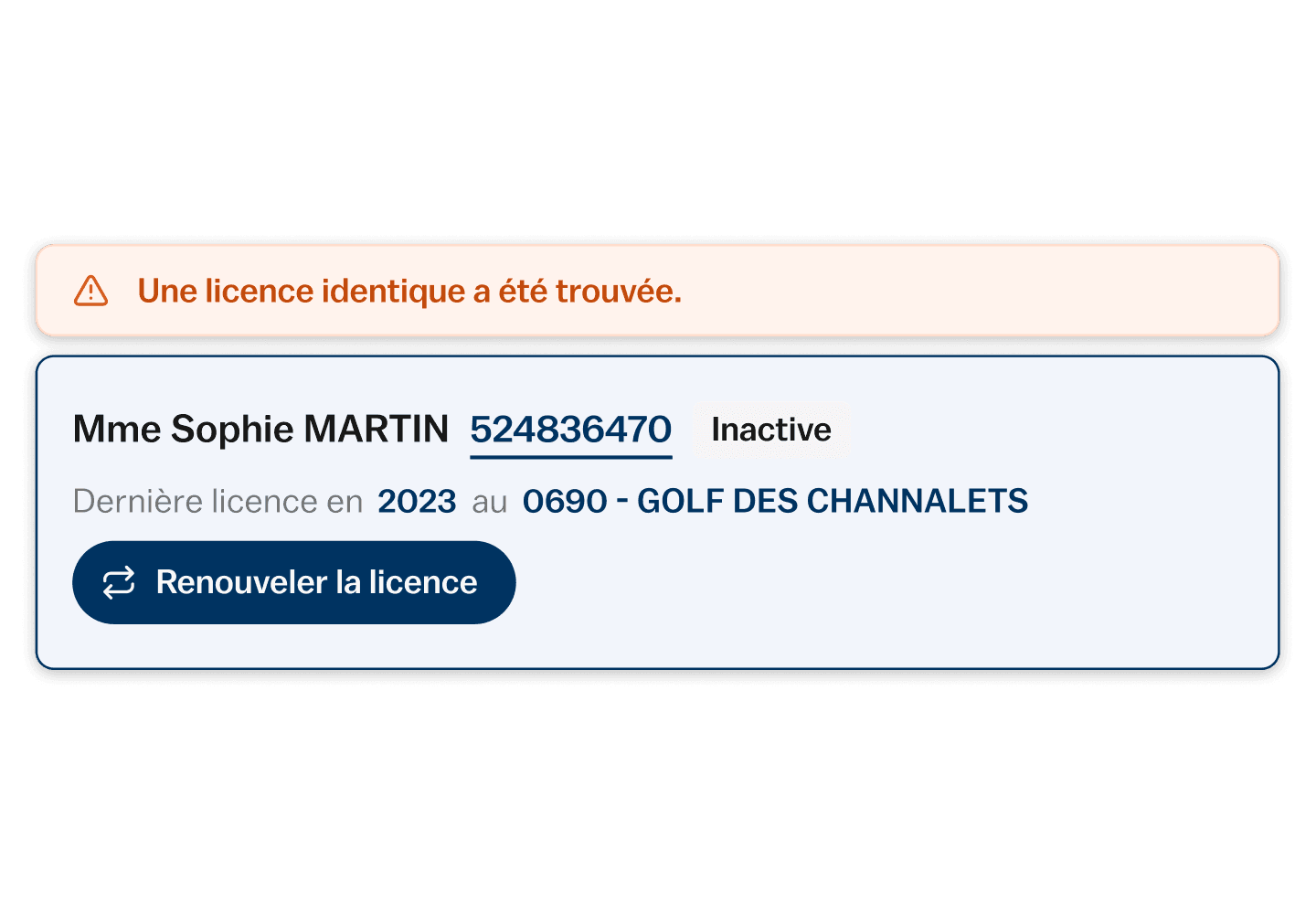
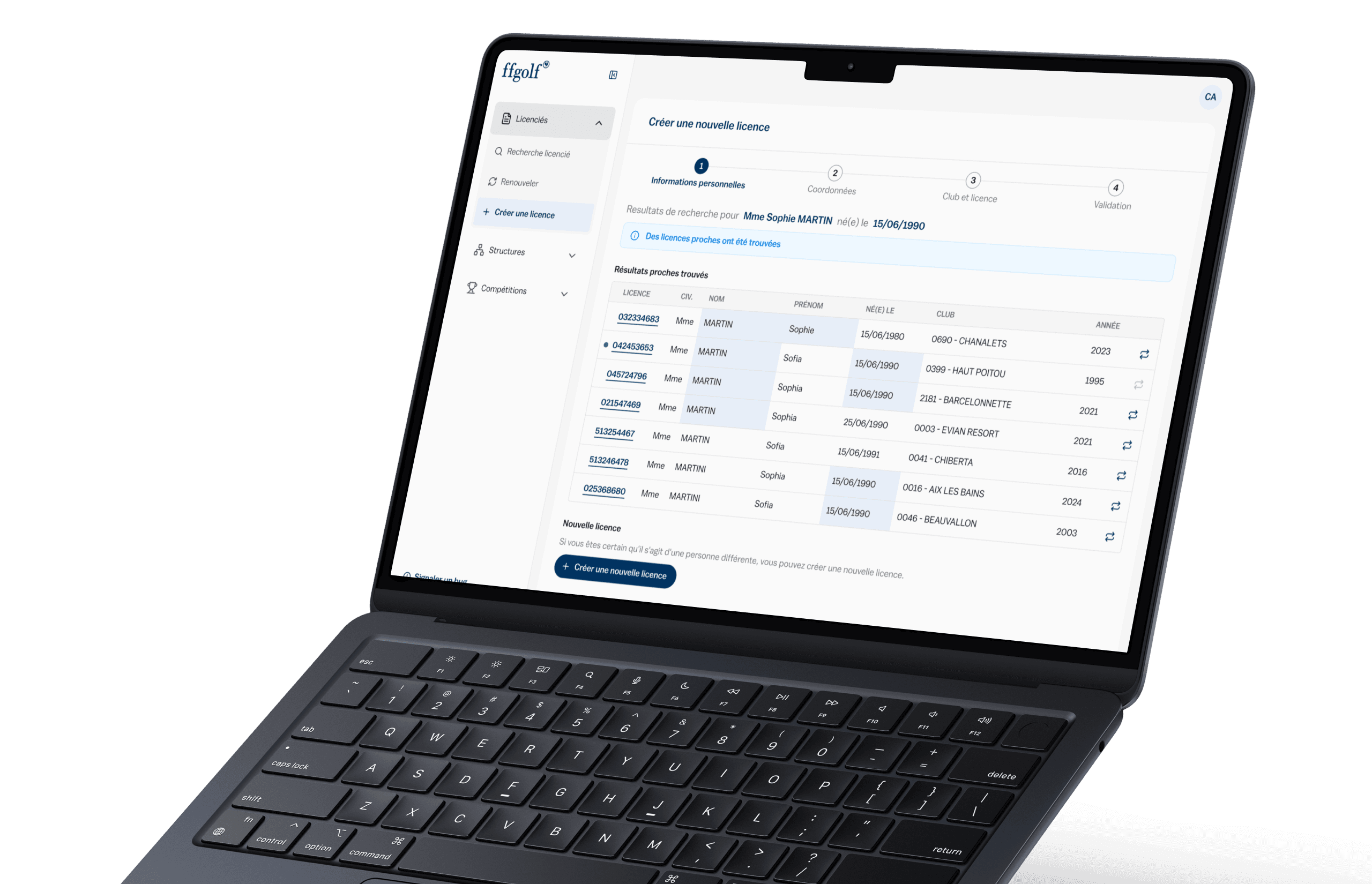
Search is integrated at the start of the journey with exact and close matches. Users immediately see whether they should create a licence or renew one, limiting errors and rework.
Support decision making
Key information is highlighted to help identify a member. Possible actions are explicit, reducing ambiguity when several profiles are close.
Reduce input
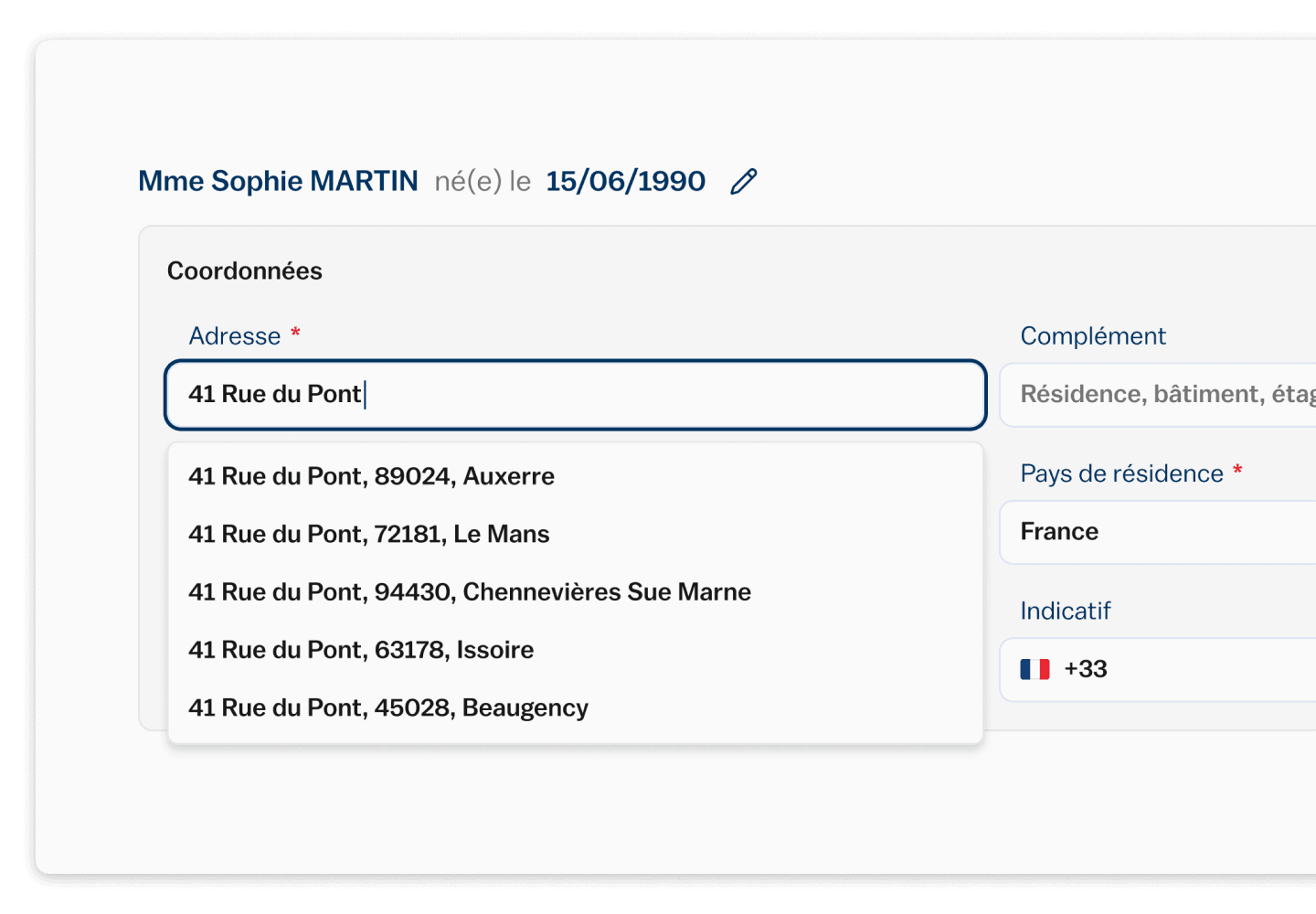
Prefilling existing data limits effort and secures information. Some fields are locked to prevent accidental edits.
Simplify business complexity
Complex rules are translated into simple, understandable choices so users can act without mastering every rule behind the scenes.
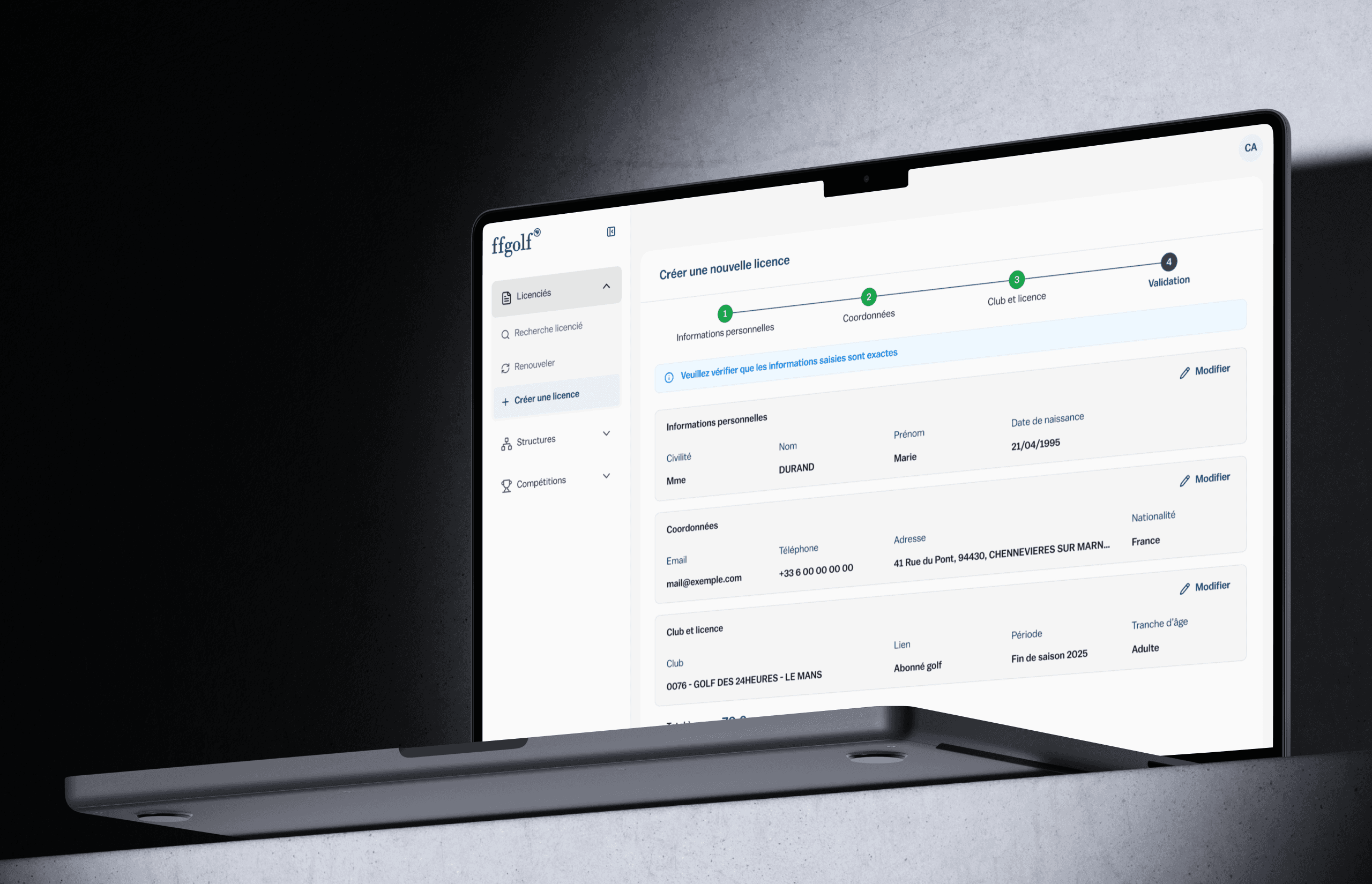
Secure validation
A review step lets users read and correct information before submission, building confidence and reducing errors near the end of the flow.
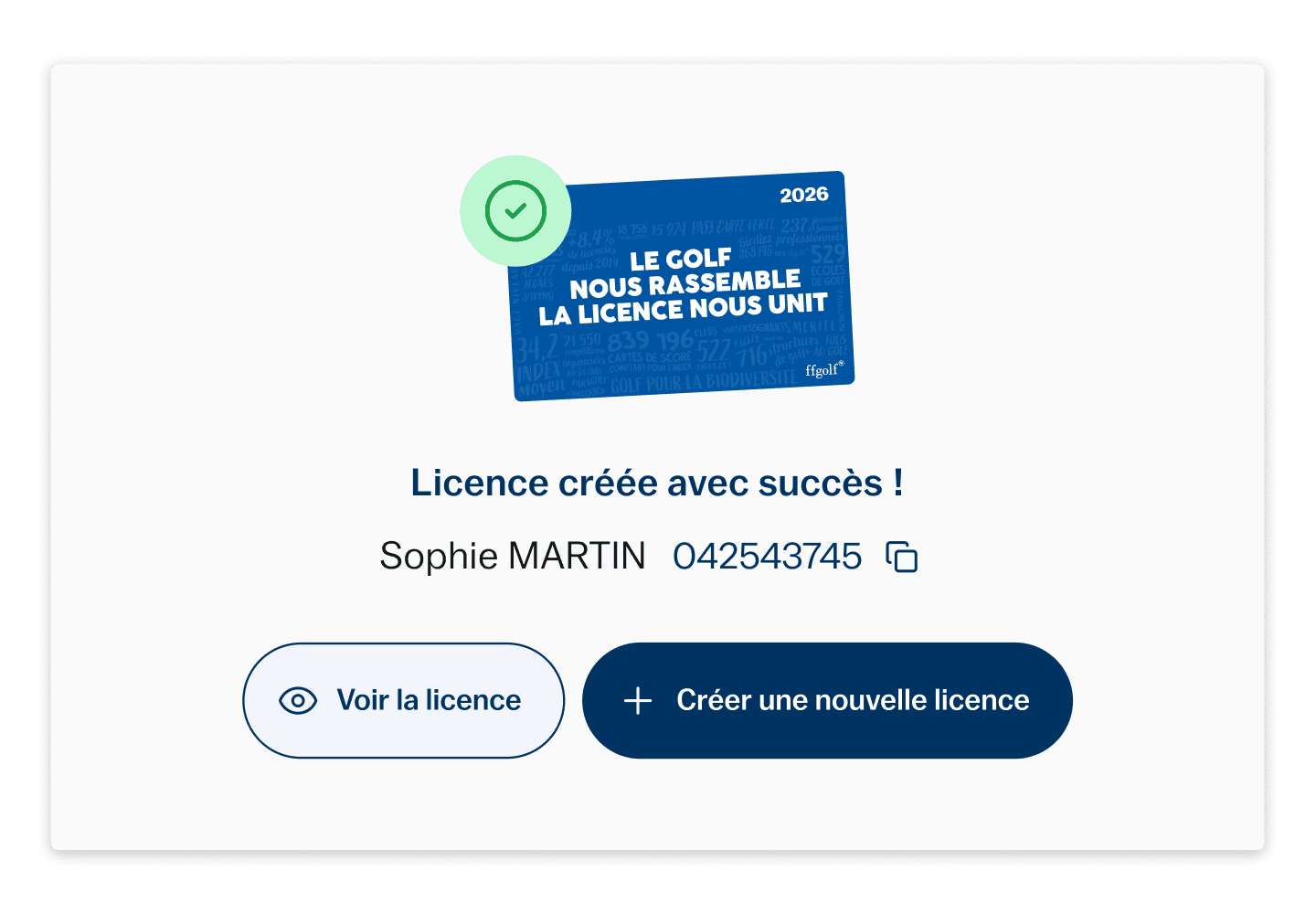
Clarify the end of the journey
A clear confirmation screen validates the action and explains next steps, limiting doubt and repeated checks.
Validation
More than eight user tests validated the journey structure and main design choices.
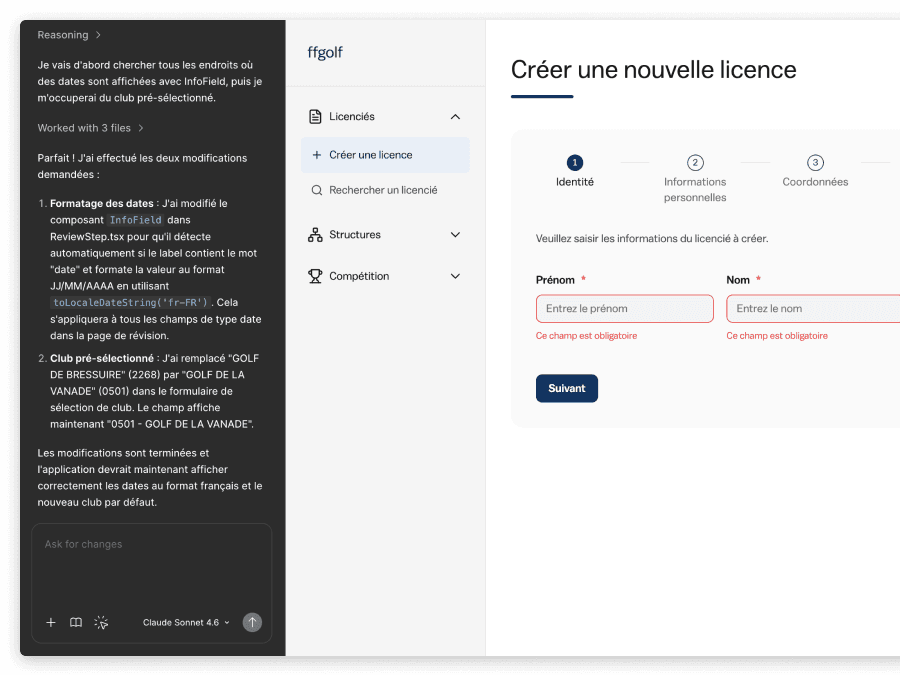
To iterate quickly on interactions before those sessions, I used Figma Make to prototype realistic UI behaviour, refine flows, and prepare usable demos for testing.
What worked well
- the stepper;
- duplicate detection (high perceived value);
- the review step.
Areas for improvement
- fee understanding;
- readability of information to distinguish duplicates;
- volume of results shown (too high in some cases).
Further iterations improved readability and hierarchy of results and clarified information such as pricing.
Impact
- Earlier duplicate detection reduces critical errors on the national database.
- Step by step structure improves execution speed and overall understanding.
- Prefilling and simplified fields reduce input effort.
- Clearer validation increases user confidence.
Outcomes
This project let me design a complex journey where every user decision affects data quality.
The main challenge was balancing speed and reliability.
It reinforced that a strong input journey is not a list of fields but a decision tool that anticipates errors and guides users.